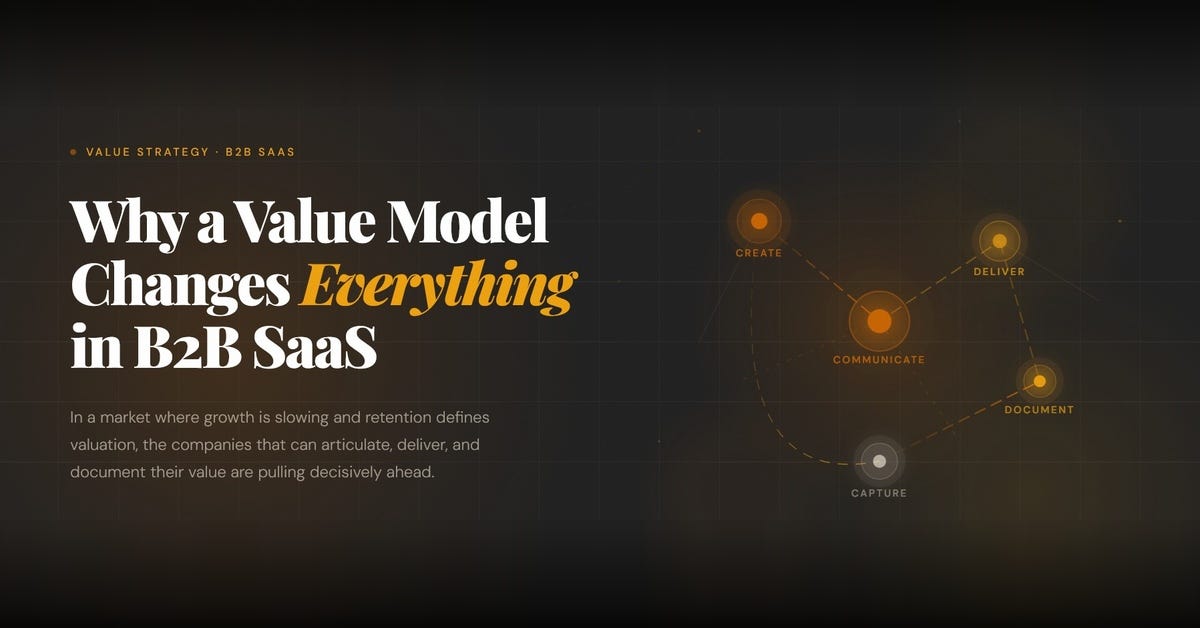
Why a Value Model Changes Everything in B2B SaaS
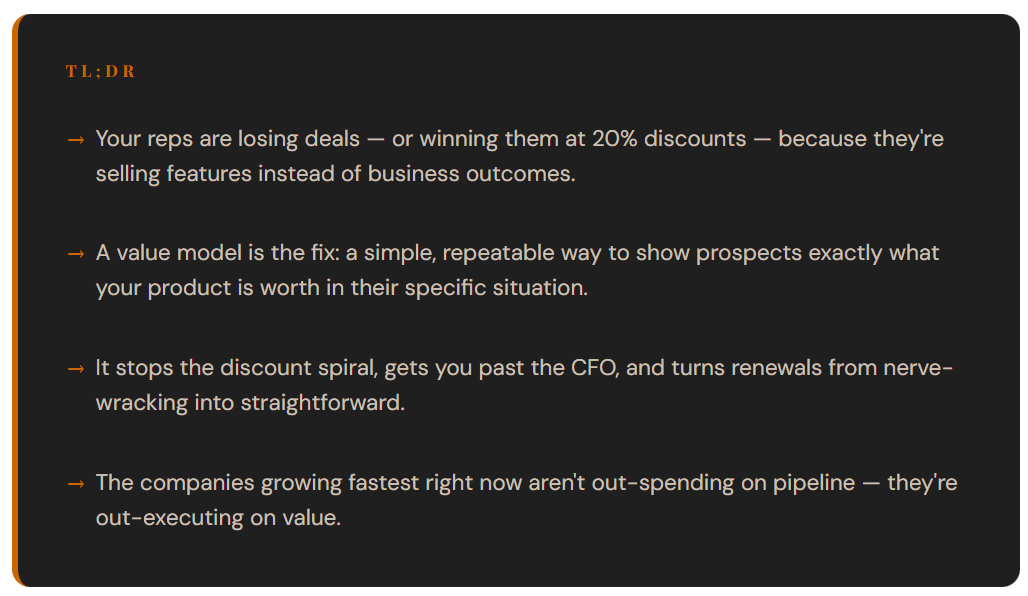
Your reps aren't failing to sell. They're failing to prove value. There's a difference..and it's the one that keeps deals out of finance and discounts off the table.

Your reps know the product inside out. They can demo every feature, answer every technical question, and handle objections in their sleep.
So why are deals still stalling? Why is the discount the answer to every pushback? Why do renewals feel like starting the sale from scratch?
The answer isn’t pipeline, headcount, or a new sales methodology. It’s that your team is selling the wrong thing. They’re selling features when buyers need to hear outcomes. They’re selling capability when the CFO needs to see a number. And without a clear, documented picture of what your product is actually worth (in real dollars, to this specific customer), every conversation defaults to price.
That’s the problem a value model solves.
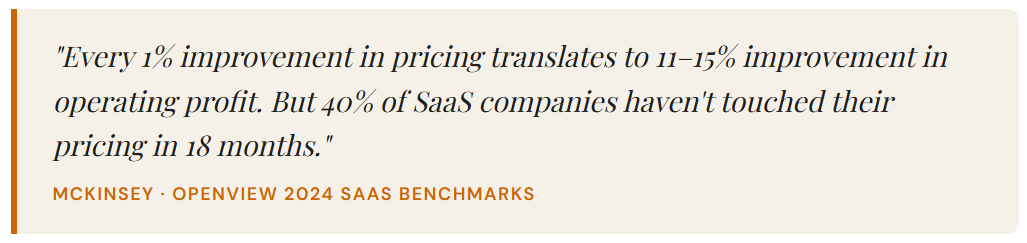
Why your team keeps defaulting to discounts
Here’s what actually happens in most B2B SaaS deals. A rep builds rapport, runs a great demo, and gets genuine interest. Then procurement gets involved. Or a CFO asks for “business justification.” Or the champion goes quiet for three weeks. And the only lever the rep has left is price.
It’s not a character flaw. It’s a systems failure. The rep never had the tools to build a proper business case. Nobody can show the prospect what it actually costs them to do nothing. And without that, discounting isn’t a bad habit…it’s the only rational move.
Sound familiar? Here’s how it shows up across your team:
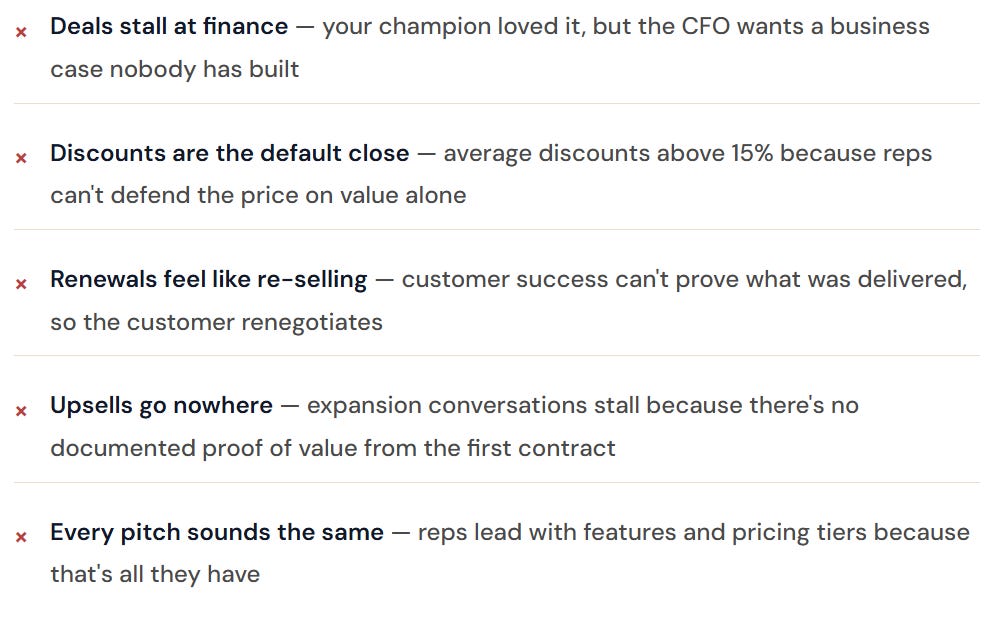
The fix isn’t a new script or another training day. It’s building a clear, repeatable system for articulating, delivering, and proving your value: before, during, and after the sale.
What a value model actually is (and isn’t)
A value model is not a deck. It’s not a case study. It’s not a ROI calculator your marketing team built once and nobody uses.
It’s a simple, structured answer to one question: what is it specifically worth to this customer to use your product instead of their next best alternative? In dollars. For their business. Based on their actual numbers.
When your reps have that answer (and can walk a prospect through it), everything changes. The conversation shifts from “can you do 20% off?” to “here’s what staying on your current solution is costing you every quarter.” The CFO meeting goes from ambush to alignment. The renewal goes from negotiation to formality.
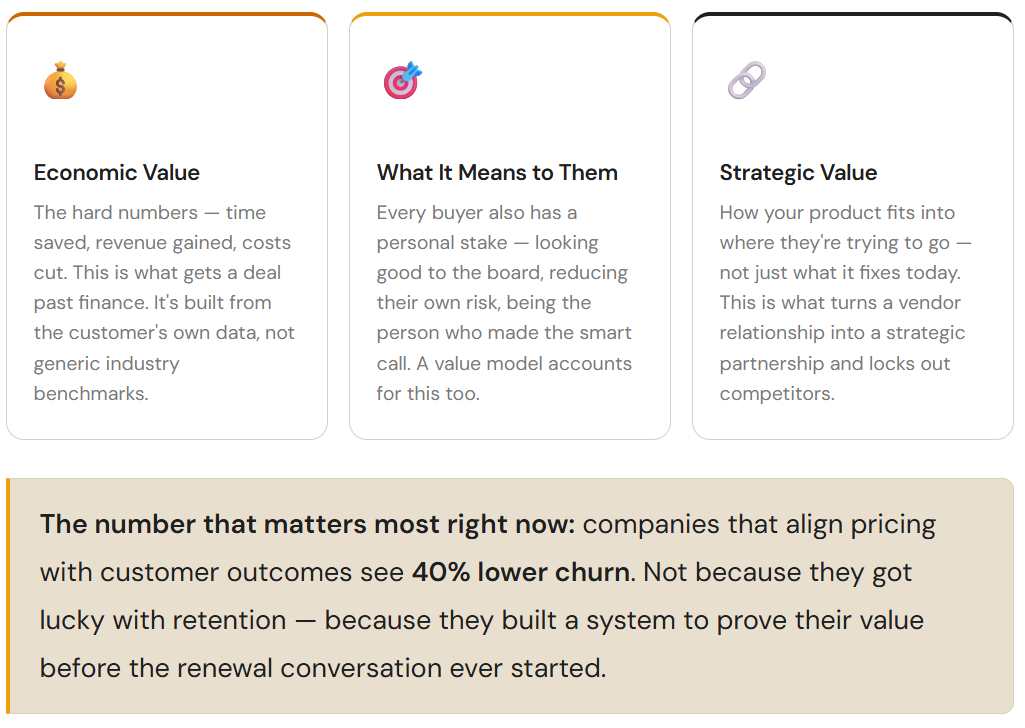
A complete value model covers three things:
Where most sales teams break down
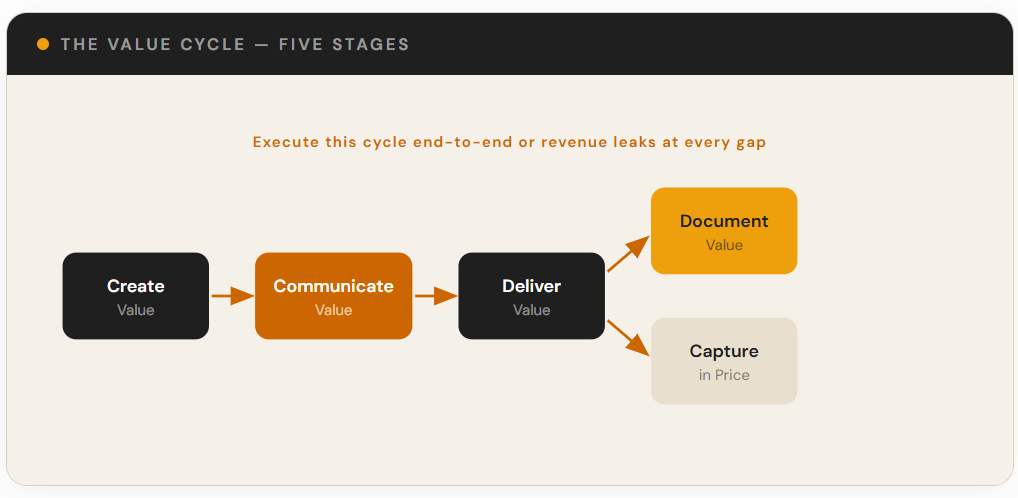
Most sales teams do one part of this well. They communicate value in the pitch. But they never build it into the rest of the motion…and that’s where the revenue leaks.
Think about your last five deals that went sideways. Chances are the break happened at one of these points:
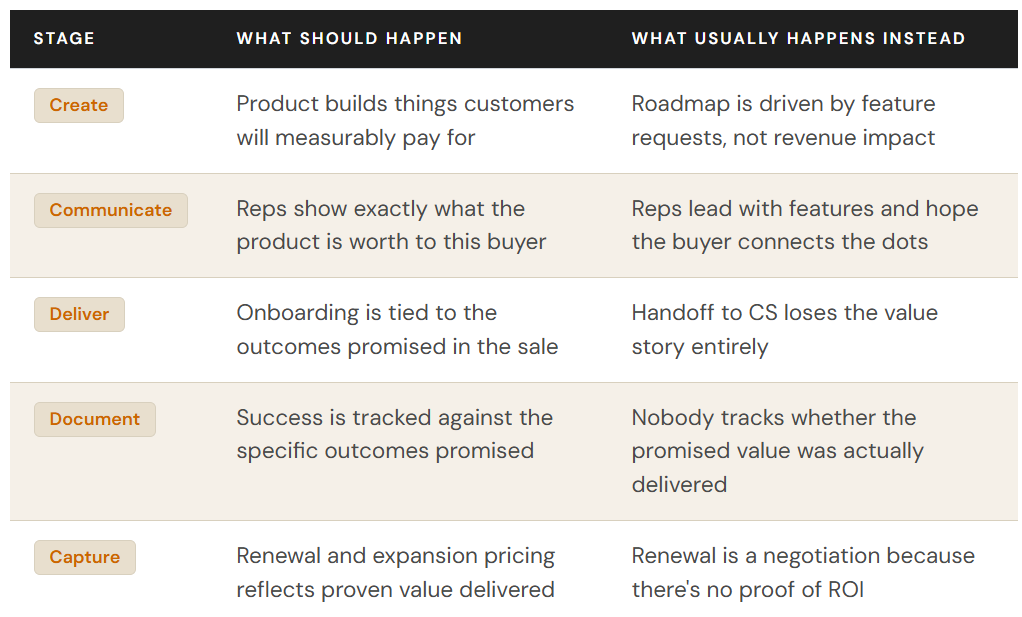
The rest of the cycle is where revenue quietly leaks - and where a value model closes the gaps.
How to actually build your value model
The good news: you don’t need a team of economists. You need three things:
a clear picture of what your best alternative costs customers,
a documented list of what makes you measurably better, and
the customer’s own numbers to put against it.
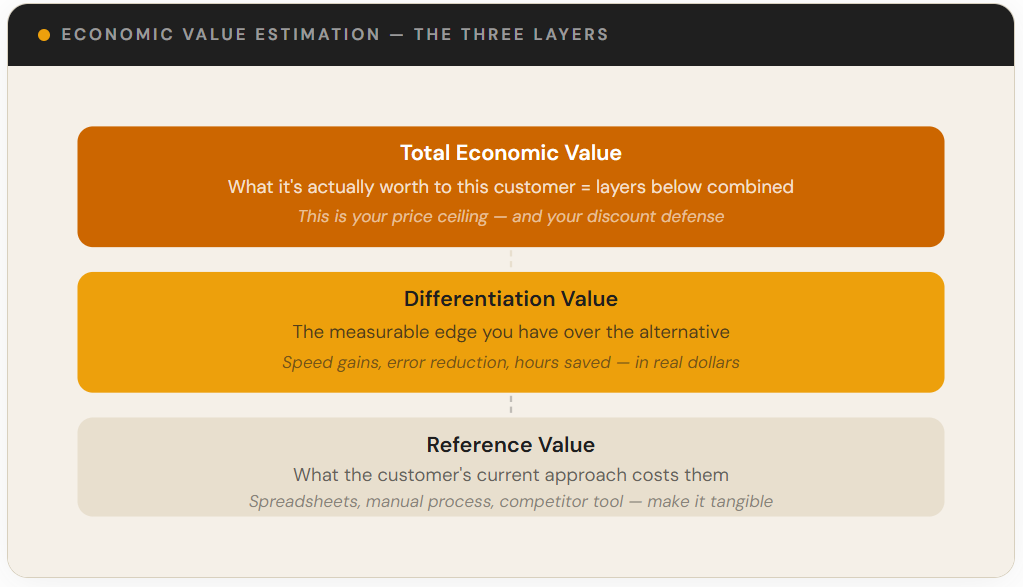
Once your reps can walk through this with a customer’s real numbers (not hypotheticals), the CFO conversation flips. Instead of “justify your price,” it becomes “show me the cost of not doing this.” That’s a completely different negotiation.
What changes when your team sells on value
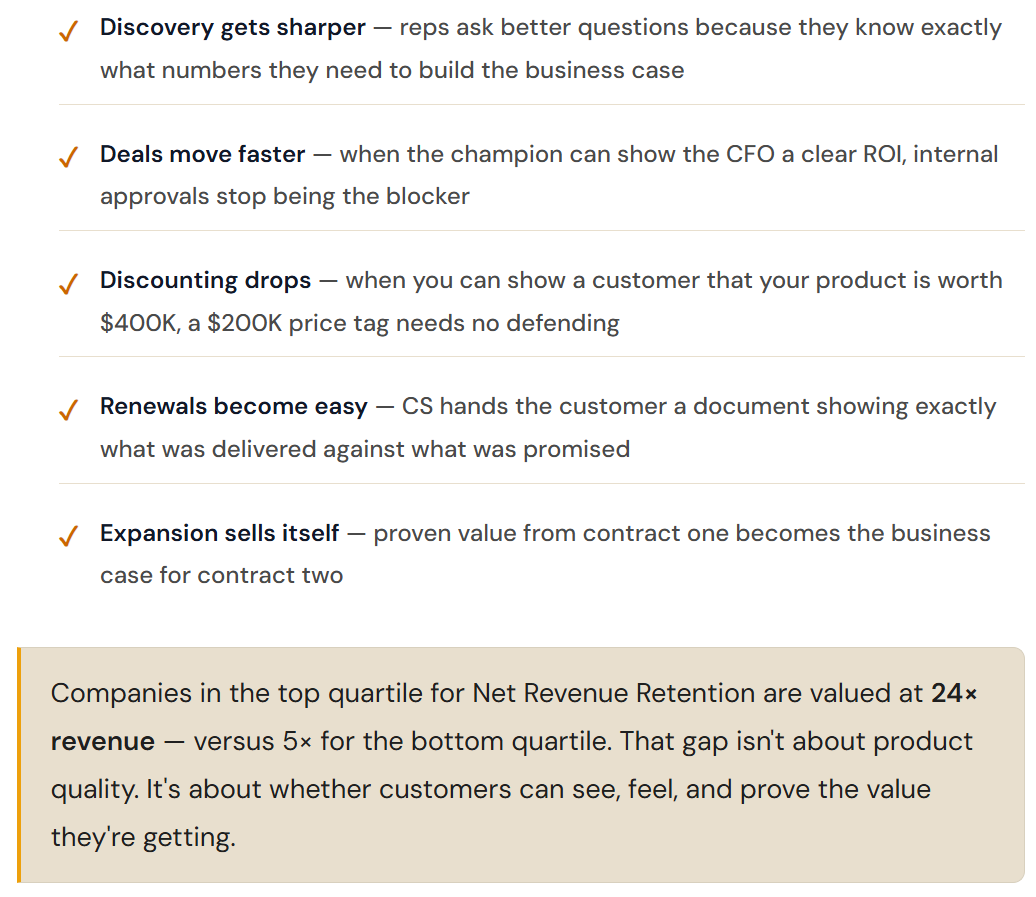
This isn’t theoretical. Here’s what actually shifts in your sales motion when you have a working value model:
How valueIQ makes this repeatable for your whole team
The hardest part of value selling isn’t convincing one rep to do it differently. It’s making it the default motion across 30, 50, or 150 reps — consistently, in every deal, without adding three hours of prep work per opportunity.
That’s what valueIQ is built for. It gives every rep a live value model for each opportunity - built from the customer’s own data, ready for the CFO conversation, and tracked through to renewal.
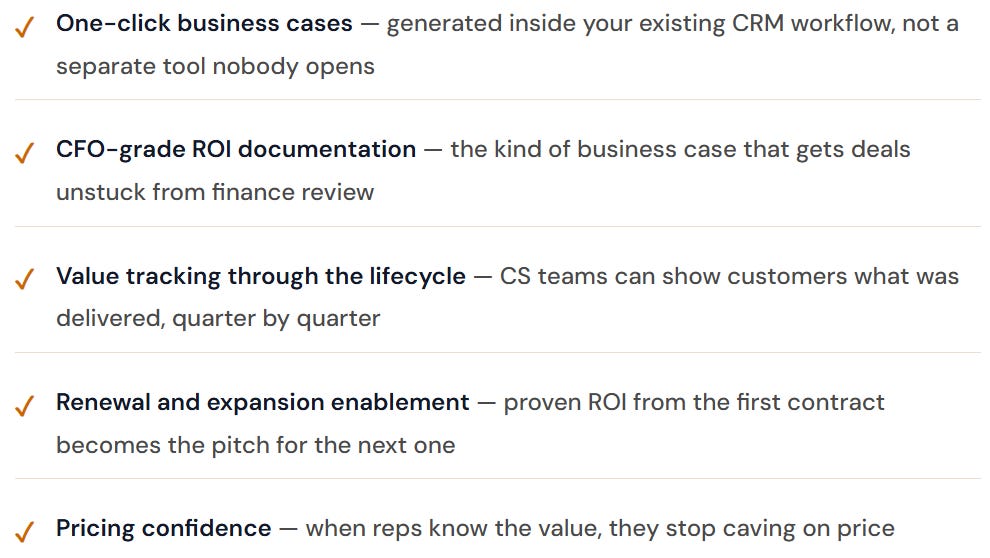
The result: higher win rates, less discounting, stronger NRR, and a sales team that talks about outcomes instead of features.
In a market where the median SaaS company spends $2.00 to acquire every $1.00 of new ARR, that’s not a nice-to-have. It’s how you survive the next two years.

This is an excellent article that describes why a value-based approach is ESSENTIAL in B2B selling.
If you cannot express your product differentiation in terms of monetary value to the customer you have LOST your sales advantage.