Pricing Page Teardown: Kong
Kong is winning on product....it’s leaking value on pricing.

How we’re analyzing Kong
For this teardown, we run Kong’s public pricing through the valueIQ Pricing Intelligence Agent and use the Advanced Report as our source of truth.
We’ll look at:
How Kong charges today (Konnect, Insomnia, Gateway Enterprise).
Where the value is (API platform + AI gateway + hybrid deployments).
How its pricing helps—or hurts—conversion, expansion, and value capture.

Part 1: Snapshot of Kong’s pricing today
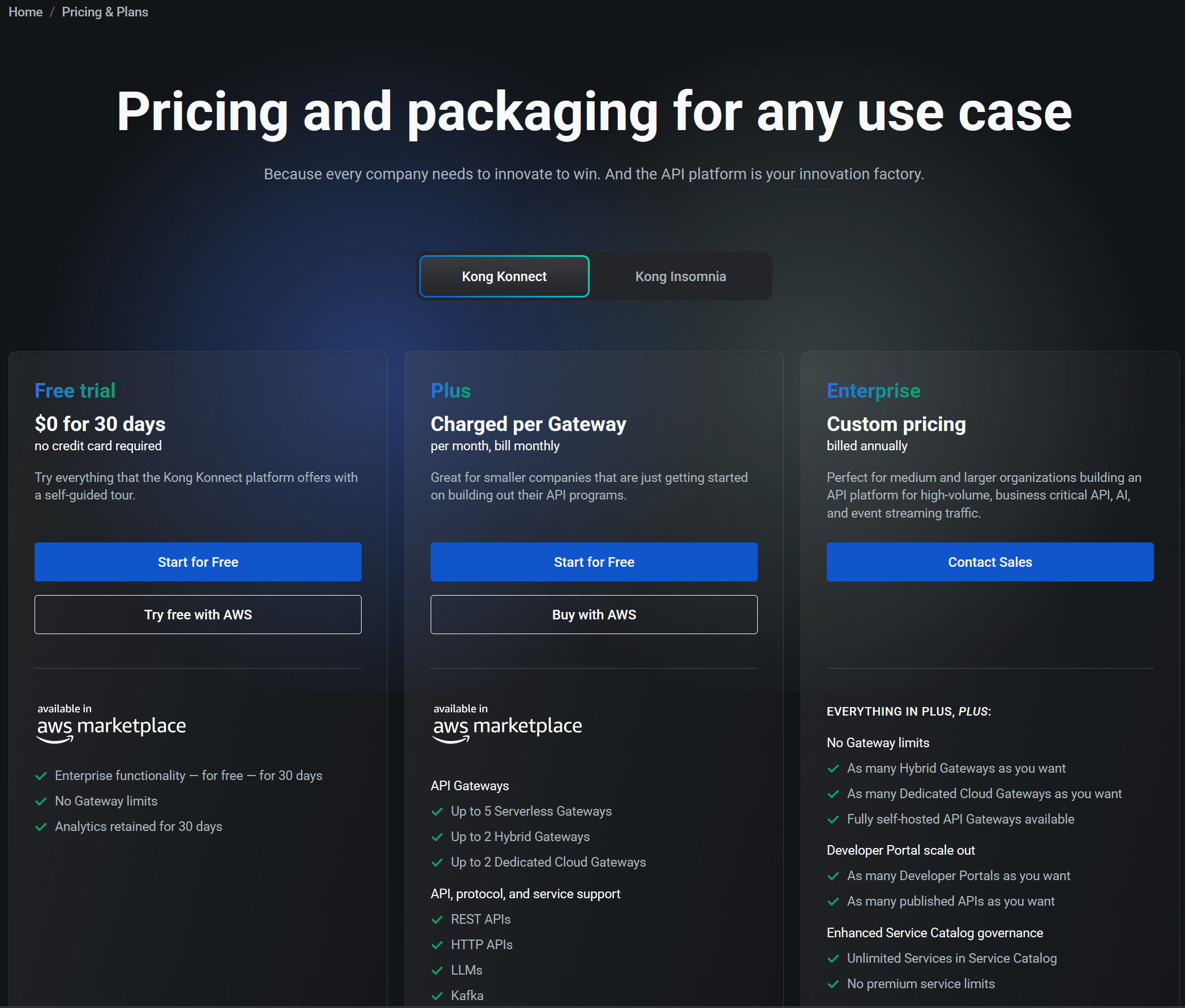
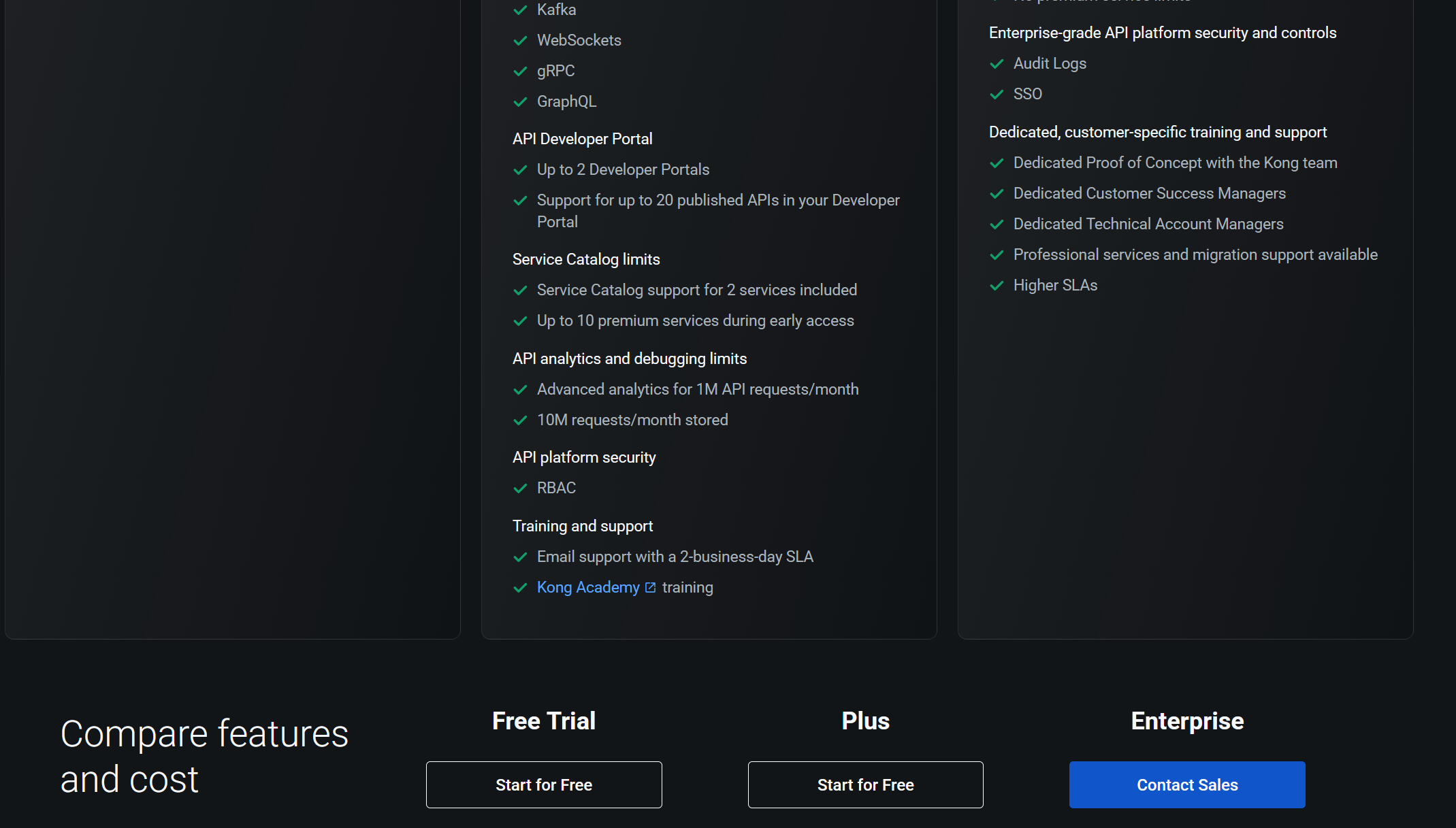
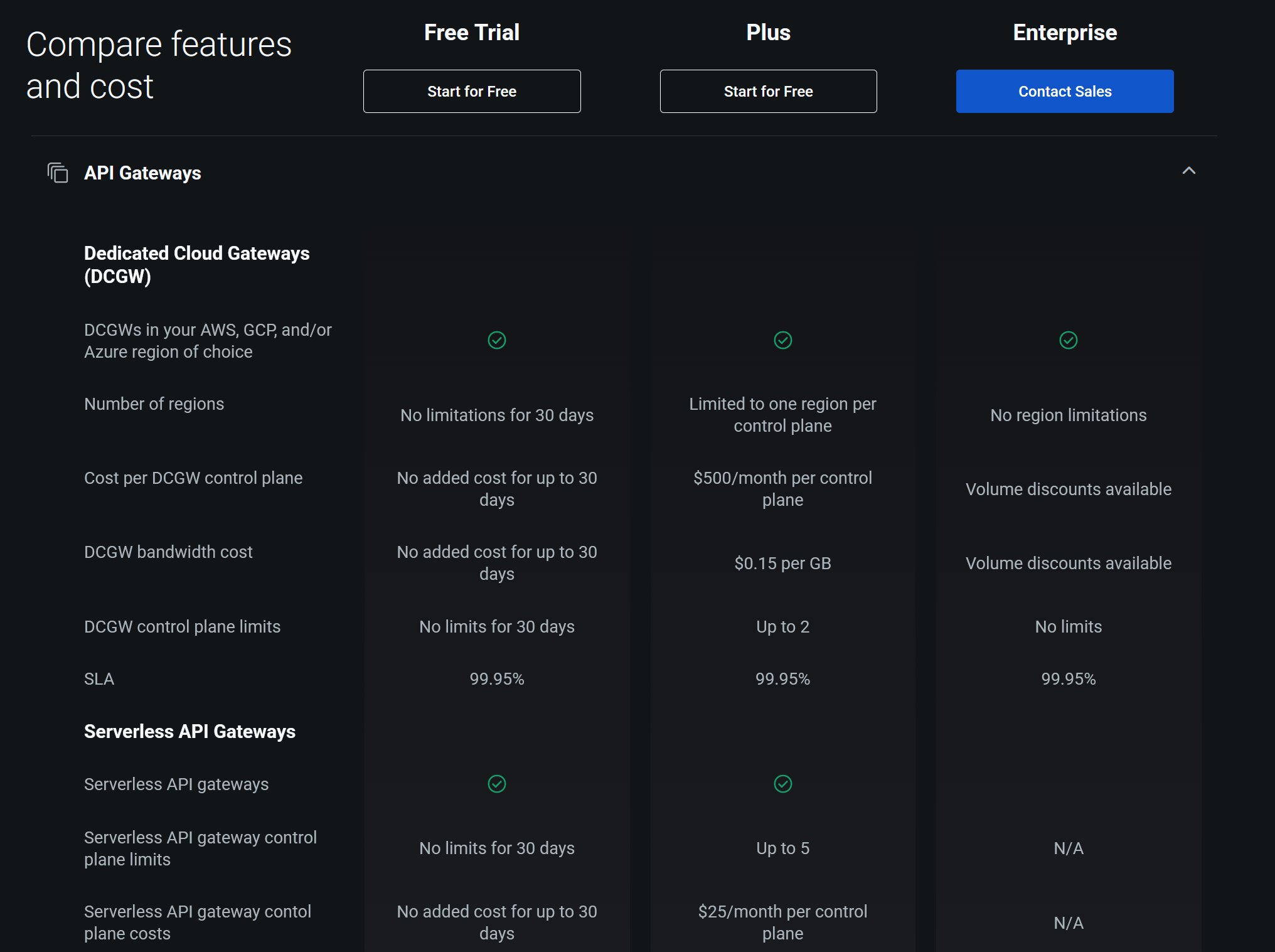
Kong has three main monetization pillars: Konnect (cloud platform), Insomnia (API design and collaboration), and Gateway Enterprise (self-hosted gateways).
Konnect
Free Trial: 30 days of full Enterprise functionality, with no limits on gateways or API calls, at $0.
Plus (public, modular pricing):
Dedicated cloud control planes: $500 per control-plane-month.
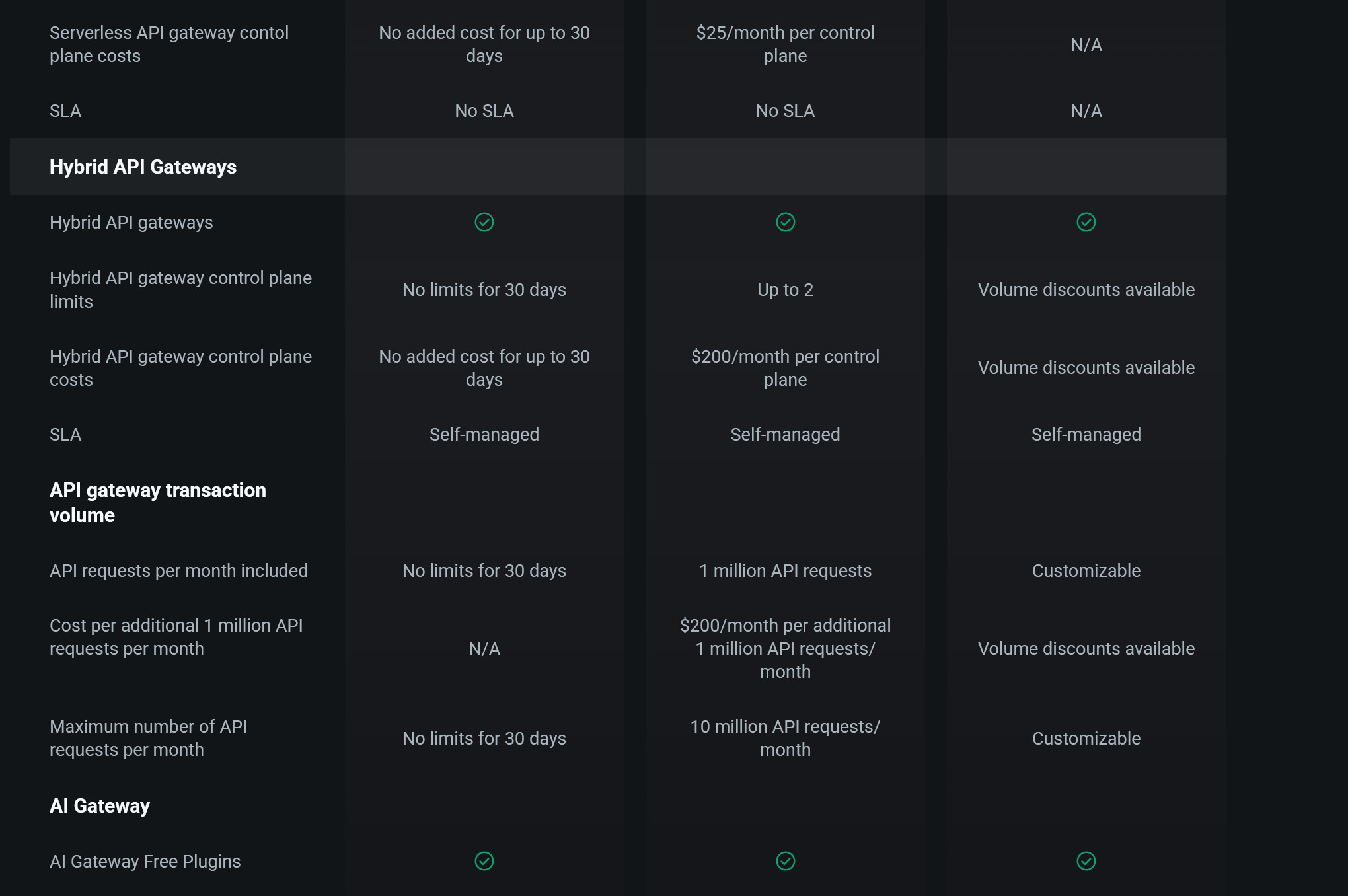
Hybrid control planes: $200 per control-plane-month.
Serverless control planes: $25 per control-plane-month.
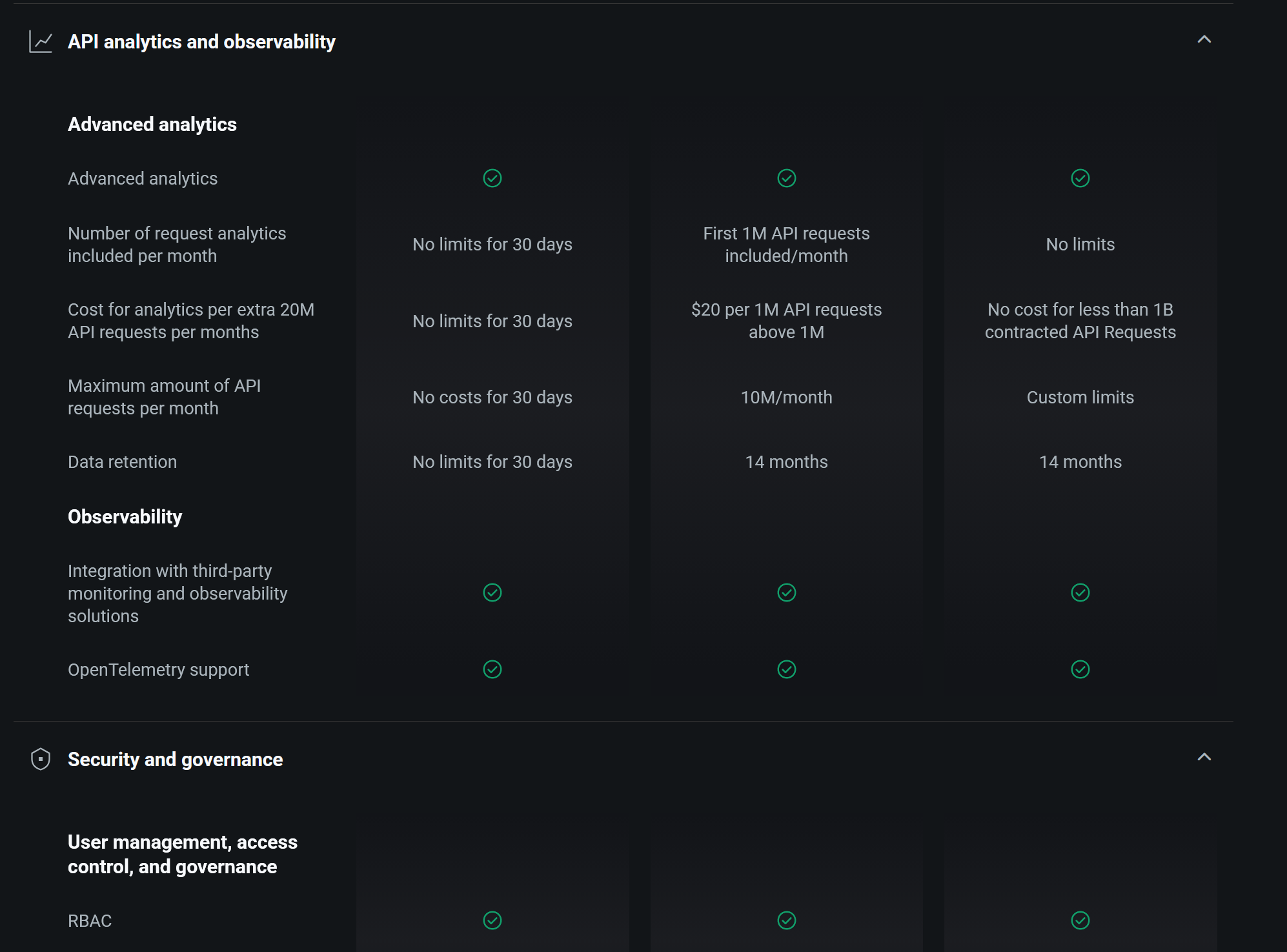
API requests: first 1M/month included; then $200 per additional 1M (up to 10M).
Analytics: 1M events included; then $20 per additional 1M.
Bandwidth: $0.15/GB for DCGW.
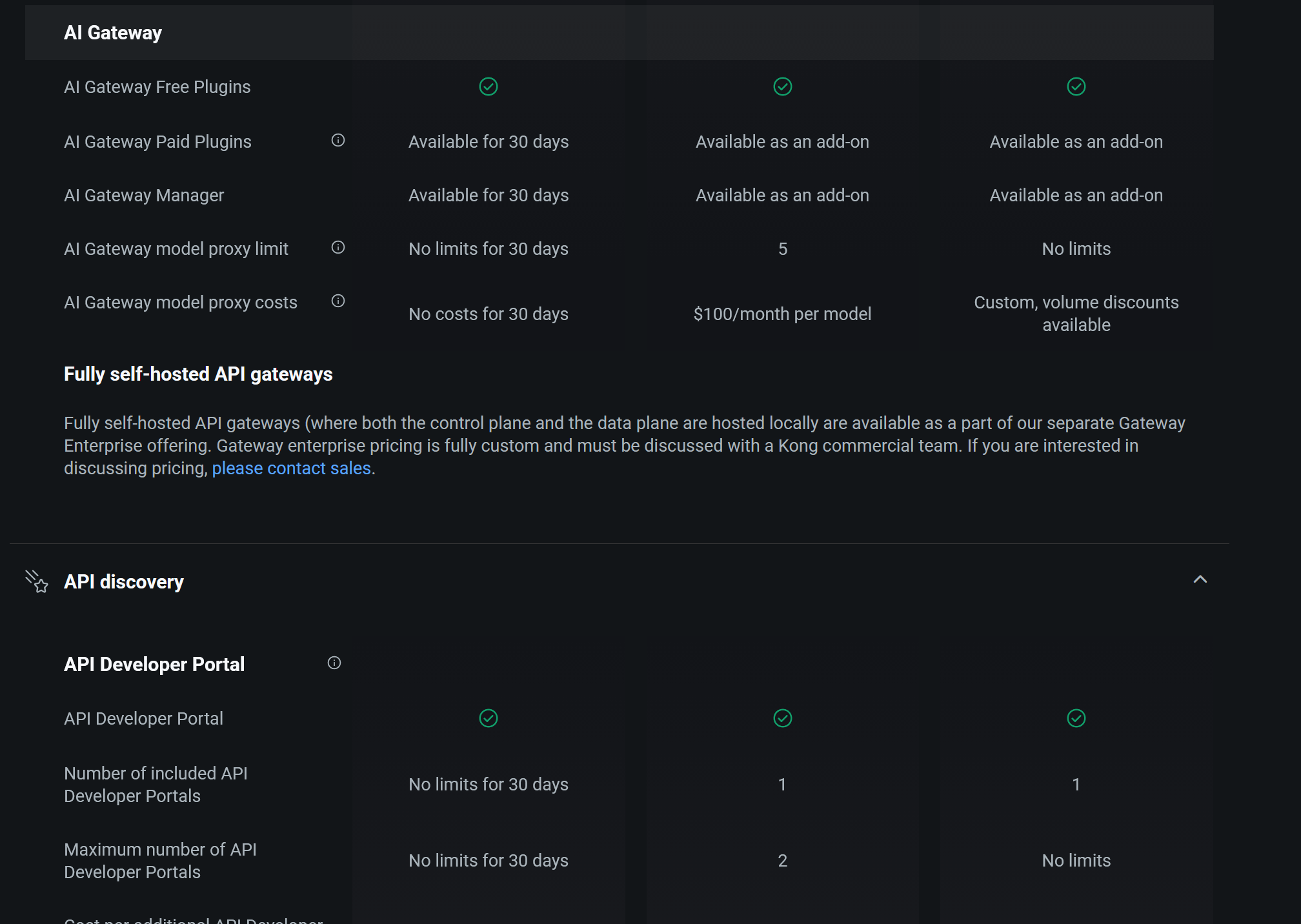
AI Gateway: $100 per model-month, up to 5 models.
Enterprise: “Contact sales,” with custom discounts on the same meters and most caps removed.
Insomnia
Essentials: $0/user/month with 1,000 mock requests/month, then $10 per 25,000.
Pro: $12/user/month (monthly), with ~15% discount on annual; includes 10,000 mock requests/month, then $10 per 25,000.
Enterprise: $36/user/month billed annually, unlimited mocks, self-serve up to 50 users, then sales.
Gateway Enterprise
Fully self-hosted gateways on custom, sales-led pricing with no public rate card.
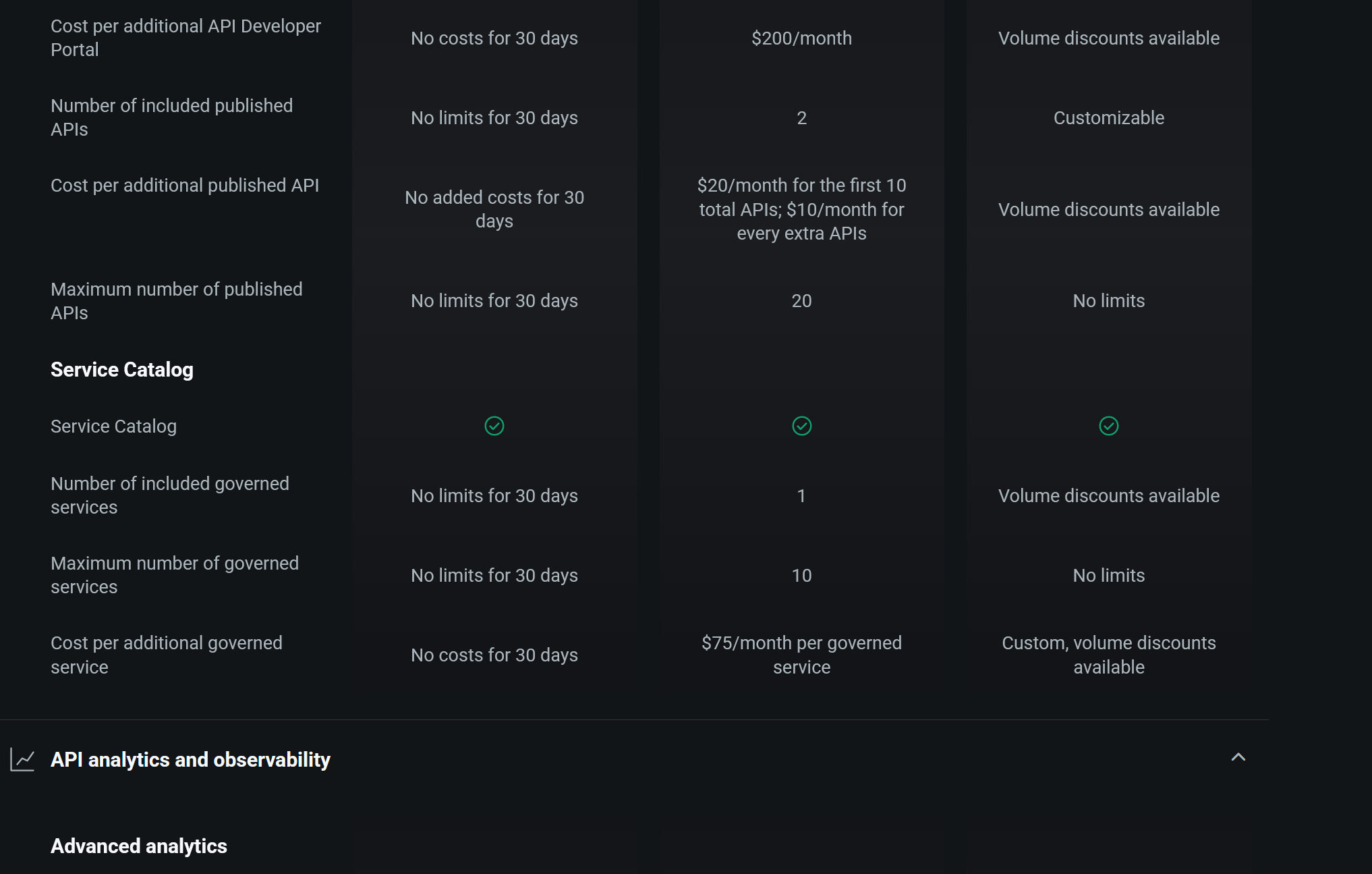
Headline: Kong’s product and unit meters are sensible. The issue is that Konnect Plus monetizes on five+ technical dimensions with no clear “primary” value metric on the page, which drags down clarity and forecastability.
Part 2: What really matters right now for Kong
The Advanced Report frames Kong’s pricing challenge in one line:
Re-center Konnect around API calls/month as the visible primary metric, delivered through 2–3 opinionated Plus bundles and standardized Enterprise profiles, while elevating AI Gateway and Insomnia+Konnect bundles as the main revenue and differentiation levers.
API management is mature; AI gateways and multi-LLM governance are not. Whoever sets a clean, credible pricing norm here gets to define the category.
Big competitors (Apigee, Azure API Management, AWS API Gateway, Tyk) already lead with API call + environment metrics. Kong’s multi-table, multi-meter layout looks harder to compare, even when unit economics are competitive.
Behavioral assessment scores Konnect Plus at ~2/5 on understandability and mutual acceptance from a buyer’s point of view, versus strong scores for Insomnia.
Economic Value Estimation suggests Kong is capturing only 10–30% of value in enterprise/AI-heavy segments, leaving room to charge more for AI governance and hybrid deployments if pricing is clearer and more outcome-linked.
There’s meaningful money on the table: modest improvements in trial→Plus conversion, SMB/mid-market win rate, AI Gateway attach, and enterprise efficiency together model to mid–seven figure ARR upside over 12–18 months.
Part 3: How Kong creates (and captures) value
Where the value is…
Across segments, the same themes show up:
SMB API teams: Avoided build/operate cost of a homegrown gateway, plus faster API delivery, worth roughly $50k–$150k per year.
Mid-market platform teams: Standardized platform, reduced downtime, central policies, worth ~$150k–$500k per year.
Large enterprise / regulated: Avoided multi-million internal platform builds, risk reduction, faster rollout of hundreds of APIs and AI services, worth $500k–$3m+ per year.
Insomnia: Developer productivity and fewer environment issues, worth roughly $600–$2,400 per developer per year, plus governance value for Enterprise.
Today, Kong typically captures:
SMB: $5k–$50k ARR (≈10–20% of value).
Mid-market: $50k–$250k ARR (≈15–25%).
Enterprise: $250k–$1m+ ARR (≈15–30%).
Insomnia Pro: $120–$180 per dev per year (≈5–20% of developer value).
So the gap is not “pricing is too aggressive.”
Its pricing is complex enough that we fail to realize the value that’s there.
Value metrics vs pricing metrics
Konnect’s value metrics (how customers think) include:
Number and criticality of production APIs.
API volume and reliability.
Number of teams and partners using portals.
Number of AI models and data sources integrated.
Konnect’s pricing metrics (what Kong charges for) include:
Number of control planes (by type).
API requests per month.
Bandwidth (GB).
Analytics events.
Number of AI models proxied.
Directionally, more usage ⇒ more value ⇒ higher price. That’s good. But for Konnect Plus, the fragmentation across four to five meters with no declared primary value metric dilutes the sense of “fair, predictable pricing.”
Insomnia, by contrast, is simple: per-seat + mock usage, which scores well on understandability, mutual acceptance, and predictability.
Part 4: What the Advanced Report recommends
The target end state is clear: Konnect should be priced and perceived as an API- and AI-centric platform with simple, comparable unit economics, not as an opaque set of technical tables.
1. Make API calls the visible spine
Declare API requests/month as the primary value metric on the Konnect pricing page.
Show included volume and $/additional 1M calls clearly per Plus bundle, keeping $200 per extra 1M as the public reference.
Highlight that Enterprise customers get discounted per-unit rates at higher volumes, even if exact numbers stay with sales.
2. Introduce opinionated Konnect Plus bundles
Instead of forcing every SMB/mid-market team to assemble a custom configuration, use 2–3 bundles backed by the existing meters:
Starter (assumed example): 1 hybrid control plane, 1M calls/month, basic analytics, 1 AI model.
Growth: 3 hybrids, 5M calls/month, advanced analytics for 5M, 2 AI models.
Scale: 3–5 hybrids, 10M calls/month, advanced analytics for 10M, 3–5 AI models.
Each bundle still rolls into standard overages or an Enterprise profile if customers exceed limits, but buyers get simple “this is what a year looks like” anchors at $5k–$100k ARR, depending on the bundle.
3. Standardize Enterprise profiles
Internally, define 2–3 common archetypes:
Volume-heavy: high calls, moderate gateways, few AI models.
Hybrid/region-heavy: many gateways and regions, moderate calls.
AI-heavy: many models and high AI traffic.
For each, set volume bands and discount ranges. Externally, you only need to surface qualitative tiers (“Enterprise,” “Enterprise Plus”) while keeping detailed bands as sales tools.
4. Weaponize AI Gateway
Kong already does something others don’t: explicit AI Gateway pricing at $100 per model-month. The issue is that it risks feeling like an “AI tax” because the ROI story is under-explained.
The report recommends:
Adding usage-normalized examples (e.g., typical calls/tokens per model) so buyers can sanity-check spend.
In Enterprise, testing hybrid AI pricing: lower per-model fees plus a small per-usage uplift.
Positioning AI Gateway as a flagship differentiator vs Apigee/Azure/Tyk, especially on multi-model, multi-cloud governance.
5. Bundle Insomnia + Konnect
Insomnia is already clean and competitive vs Postman. The unlock is to:
Offer simple discounts on Insomnia Pro/Enterprise when paired with Konnect Plus/Enterprise.
Sell “full API lifecycle”: design and test in Insomnia, run and govern in Konnect, priced as a coherent platform instead of two separate tools.
Part 5: Pricing SWOT for Kong
The Advanced Report’s pricing SWOT sums up where Kong is strong, where it’s vulnerable, and where the upside lies.
Strengths
Deep hybrid, multi-cloud, and self-hosted gateway options across Konnect and Gateway Enterprise.
Explicit AI Gateway with per-model pricing and rich plugins.
Insomnia’s clean per-seat + mock-usage model is competitive with Postman.
Usage-based meters that map to cost/value drivers (calls, bandwidth, gateways, AI models).
Weaknesses
Konnect Plus multi-meter pricing is hard to understand and forecast, especially for SMB/mid-market buyers.
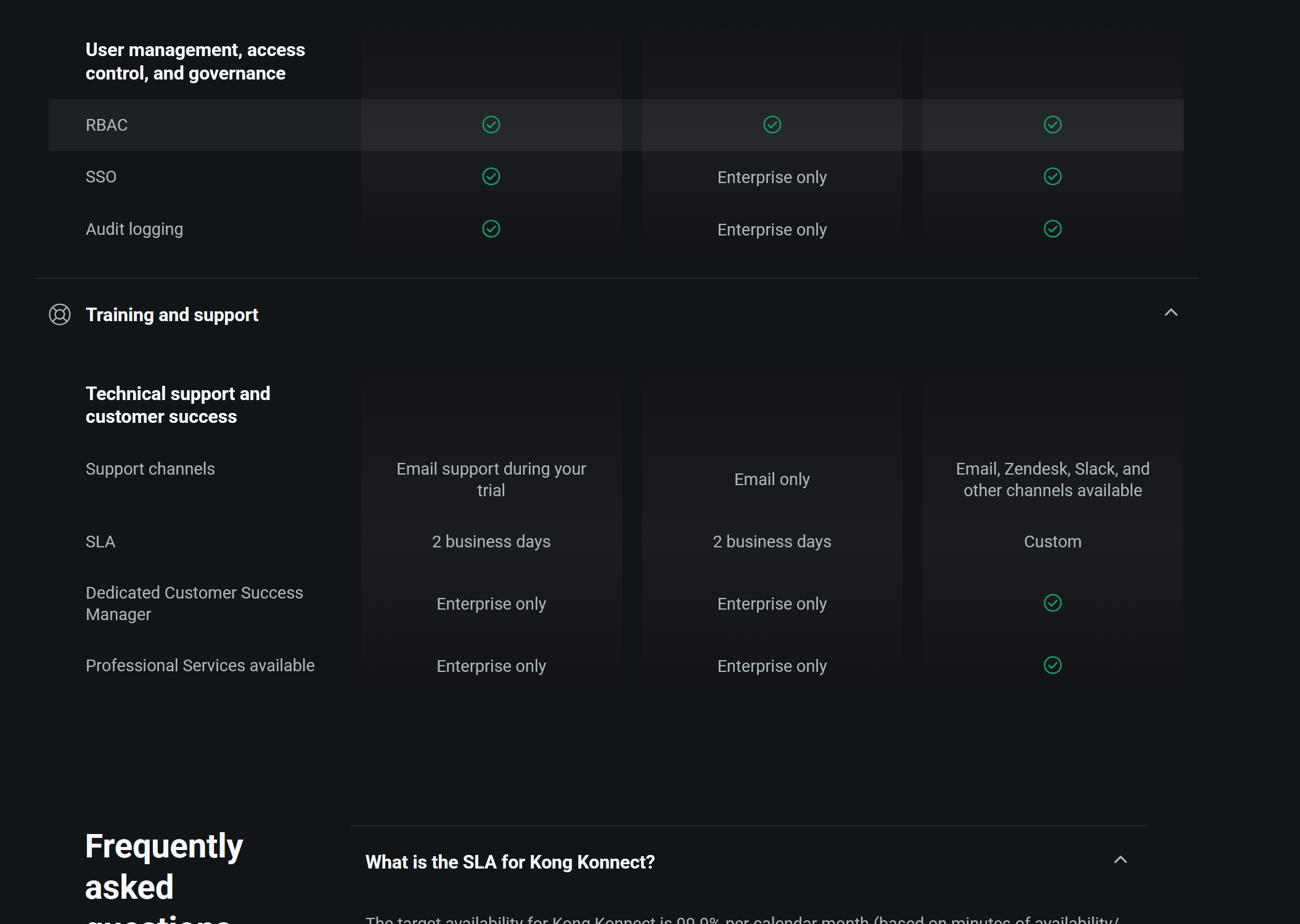
Enterprise is “contact sales” only with no public anchors on $/1M calls or typical ranges, slowing shortlisting and procurement.
Overages and behavior at caps (calls, analytics, mocks, AI models) are not clearly documented.
AI Gateway’s $100/model/month fee isn’t tied to quantified ROI or normalized usage, making it vulnerable to “AI tax” perceptions.
Opportunities
Lead the emerging AI gateway category with clear, outcome-based pricing and ROI proof.
Use Insomnia + Konnect bundles to become the default “full lifecycle” API platform.
Monetize hybrid and self-hosted deployments as a unified “Kong Platform” premium story.
Threats
Hyperscaler gateways (AWS, Azure) are commoditizing basic routing at very low unit prices.
Apigee, MuleSoft, and IBM are discounting heavily in big RFPs.
Tyk and similar players undercut with simpler, cheaper AI gateway narratives for SMBs.
What Kong should actually do next
The report prioritizes five moves:
Simplify Konnect Plus for SMB/mid-market.
API-call-centric pricing hero, opinionated bundles, unified meter/overage table, and example bills.
Weaponize AI Gateway.
Clear packaging, usage-normalized examples, ROI stories, and hybrid AI pricing pilots in Enterprise.
Standardize Enterprise economics and platform story.
Enterprise profiles, commitment/discount guardrails, and a coherent “Kong Platform” monetization that spans Konnect and Gateway Enterprise.
Scale Insomnia + Konnect bundles.
Light discounting plus GTM that sells the full lifecycle, not just tools.
Institutionalize pricing intelligence.
Track effective $/1M calls, $/gateway, and $/model vs Apigee, MuleSoft, Azure, AWS, and Tyk, and feed that into discount curves and ongoing pricing experiments.
If you’re running pricing or product at Kong, this is the shift: stop treating pricing as a set of tables, and start treating it as the way you tell your platform and AI story. The underlying economics are already there….the job now is to make them obvious, comparable, and easy to say “yes” to.
Want to see Pricing Intelligence in action? Every new user gets 200 Free Credits. Advanced Reports are 120 Credits, and Standard Reports are 30 Credits.